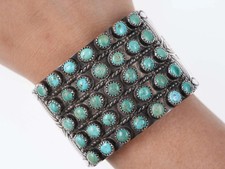
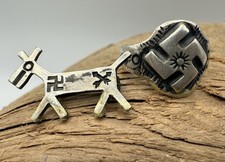
Detailed 1940s Fred Harvey Era Sterling Silver Cerrillos Turquoise Bracelet
Detailed 1940s Fred Harvey Era Sterling Silver Cerrillos Turquoise Bracelet
This Fred Harvey Era sterling silver cuff showcases the artistry of early 20th-century Southwestern design.
Condition: Used
Price: USD 275.00
Seller: treasuresandhistory (100.0% positive feedback, 1708 reviews)
View this Fred Harvey item on eBay
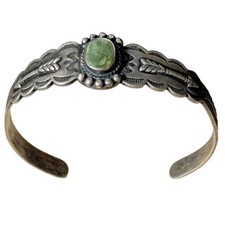
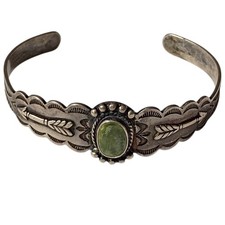
Item Description from Seller
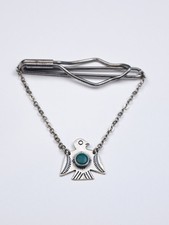
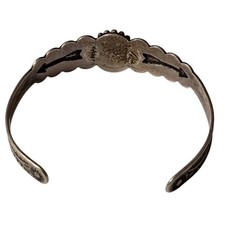
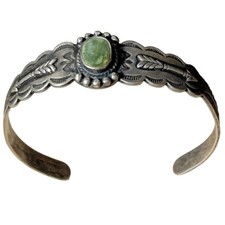
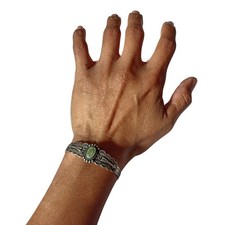
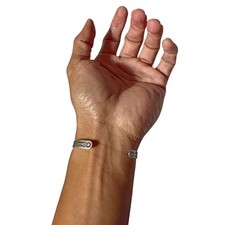
This Fred Harvey Era sterling silver cuff showcases the artistry of early 20th-century Southwestern design. At its heart is a striking cerrillos turquoise cabochon, framed by a flower-inspired silver setting and surrounded by intricate hand-stamped motifs. Symbols such as thunderbirds and arrows, deeply rooted in Navajo culture, add layers of meaning and craftsmanship to this timeless piece size bracelet mesures 6″½ including gap by 15mmwide totalweight 13.8grams Fred Harvey Era Jewelry
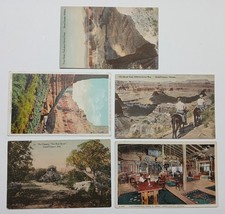
In the early 1900’s, the Southwest, and Santa Fe specifically, became a booming tourist destination. Tourists came from across America to explore the vast landscape, learn about the different cultures out West, and purchase jewelry and tokens made by Native Americans.
Over time, artisans and traders who ran trading posts learned that tourists’ taste often differed from that of the Native artisans. Tourists preferred jewelry that was lighter and had smaller embellishments and stonework, while many Native jewelry artists preferred larger stones and heavier silver styles.
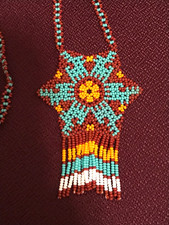
To make the jewelry more attractive to tourists, artisans began designing pieces that catered to their tastes: lighter pieces with recurring design elements and symbols such as thunderbirds, crossed arrows, arrowheads, dogs, and zig zag snakes.
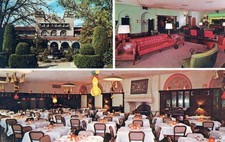
At the same time, an entrepreneur named Fred Harvey (1835-1901) set out to build a hospitality enterprise across the Southwest. He began his historic endeavors by first opening Harvey House restaurants, then he developed a catering business in the Santa Fe Railway cars, followed by building Fred Harvey Hotels along the rail route. It was in these hotels and eating houses that Fred Harvey decided to develop and sell a line of lightweight, lower-cost iconic jewelry that we now know as Fred Harvey Jewelry. Surprising to many, the Fred Harvey Company’s jewelry was often not “Indian handmade,” but produced at scale by machines and designed with iconography that was attractive to tourists. While the Fred Harvey Corporation dictated the symbols to use in their line, these trends, in turn, influenced Native American artisans to produce their own handmade jewelry using those simple, repetitive motifs. These unique pieces were made between 1900-1955, and are heavily sought after today.
Today, jewelry referred to as Fred Harvey era jewelry or railroad jewelry includes both pieces made by hand by Native artisans and machine-made jewelry. Whichever you prefer, each design represents a true piece of history of the American Southwest.